


PHILIPPINES: A US PAWN

New US missiles aim at China and Russia
CenPEG Issue Analysis
Center for People Empowerment in Governance
13 May 2026
The April 20 – May 8 Balikatan armed exercises between the Philippines and the United States marked a dangerous turning point in the country’s strategic and security landscape. More disturbing was the live firing of a US Tomahawk cruise missile from Tacloban City to a target site in Laur, Nueva Ecija using the Typhon Mid-Range Capability (MRC) missile system. The missile traveled 630 kilometers across Philippine territory, demonstrating not merely interoperability between allied forces but the operationalization of long-range offensive missile systems on Philippine soil.
Drills also occurred near key flashpoints, including the South China Sea and within range of Taiwan.
The Tomahawk (BGM-109) is a long-range, subsonic cruise missile used by the US Navy and its allies for precision strikes against high-value land targets. Launched from ships or submarines, a Tomahawk flies at extremely low altitudes, skimming the terrain at 100 to 300 feet (30–90 meters) above the ground to avoid radar detection, with a range of up to 1,500 miles (2,400 km).
The live firing of a Tomahawk missile is especially alarming because it demonstrates the transformation of Philippine territory into an active missile deployment and launch pad. Philippine territory is no longer merely hosting visiting troops or so-called humanitarian exercises; it is now serving as a platform for long-range strike systems capable of participating in actual conflict scenarios in the Indo-Pacific.
The 41st Balikatan drills are one of the most expansive in history, with over 17,000 troops participating, focused on maritime security, air defense, and cyber defense. The largest contingent came from the US with 12,000 personnel while the Philippines had 5,000. Australia sent 111 personnel: other contingents came from Japan, France, Canada, and New Zealand.
Disconcertingly, Japan under Prime Minister Sanae Takaichi. is significantly accelerating its military expansion, leading to widespread observation of a "neo-militarism" rise or a shift away from its post-World War II pacifism.Not to be forgotten: Japanese imperialism and fascism during World War II left over 10 million people – mostly civilians - dead due to war crimes and atrocities including rapes of women between 1937 and 1945. More recent estimates argue that up to 30 million people were killed across Asia and the Pacific. Most of these deaths occurred in China, followed by Korea, the Philippines, Indonesia, and Southeast Asia.
The unprecedented Balikatan demonstration must be seen together with the broader strategic framework represented by “Pax Silica” - the emerging US geopolitical architecture in the Indo-Pacific. The system combines military dominance, digital-technological supremacy, semiconductor supply chains, artificial intelligence, and strategic basing networks to preserve American primacy against China.
Under Pax Silica, the Philippines increasingly functions not as an independent sovereign actor but as a forward operating platform in Washington’s encirclement and containment strategy against Beijing.
No longer ordinary drills, the Balikatan exercises evolved into rehearsals for regional war scenarios.
Pax Silica and the Militarization of the Indo-Pacific
The concept of Pax Silica reflects a new phase in global geopolitics. Unlike earlier eras of imperial control centered primarily on territorial occupation or naval supremacy, today it revolves around strategic control over digital infrastructure, semiconductor production, telecommunications, artificial intelligence systems, cyber capabilities, and integrated military technologies.
The US hegemon seeks to maintain dominance over the Indo-Pacific by linking military alliances with technological and economic control. Due to its geographic location near the South China Sea and Taiwan Strait, the Philippines has become an important node in this architecture.
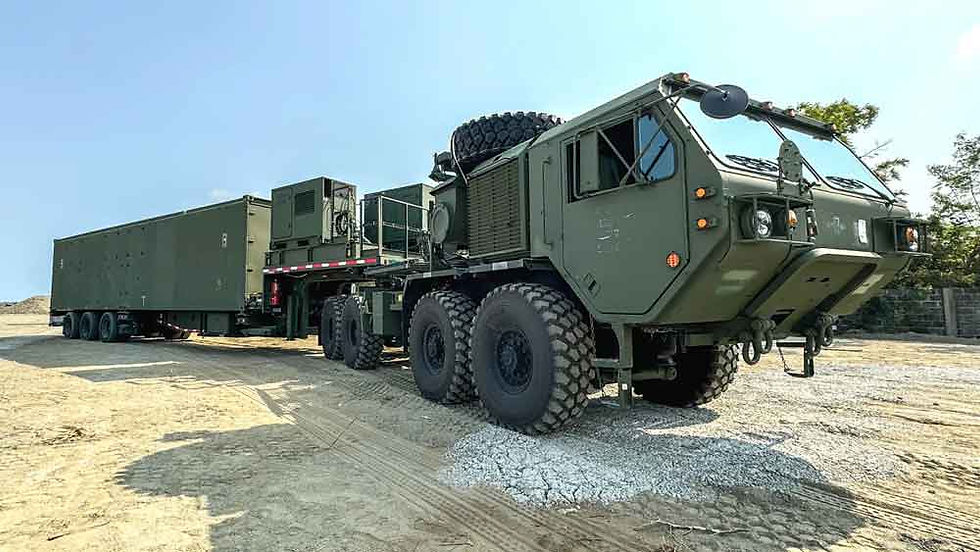
Under this frame, Enhanced Defense Cooperation Agreement (EDCA) sites, rotational troop deployments, integrated missile systems, and joint military exercises are designed not for Philippine defense – as the US claims - but for broader US strategic objectives. The deployment of the Typhon missile system in the Philippines since 2024 illustrates this shift. The Typhon system — capable of launching Tomahawk cruise missiles and SM-6 missiles — can strike targets thousands of kilometers away, including areas in China and Russia.
The implications are profound. The Philippines risks becoming a frontline state in a major-power confrontation that it neither initiated nor can fully control.
The Typhon Missile System and Strategic Escalation
Moreover, the Typhon MRC system represents a qualitative escalation in US military posture in the Philippines. Unlike traditional defensive systems, the Typhon launcher is explicitly designed for long-range offensive operations. Tomahawk missiles are precision-guided cruise missiles historically associated with major US wars and interventions in Iraq, Syria, Yugoslavia, and elsewhere.
Several alarming precedents emerge from this development:
Civilian Infrastructure Militarization: The Tacloban Airport, a civilian facility, was used in the operation. This blurs the distinction between civilian and military infrastructure, potentially exposing civilian populations and facilities to future targeting during armed conflict.
Integration into US Warfighting Doctrine: The missile firing was reportedly connected to the Joint Pacific Multinational Readiness Center scenario integrated into Balikatan exercises. This indicates that Philippine territory is increasingly being woven into operational war plans and battlefield simulations targeting hypothetical regional adversaries.
Forward Deployment Against China: Although Philippine and US officials frame these activities as defensive, the geographic logic of the deployment points clearly toward China-related contingencies. Typhon missiles stationed in the Philippines possess the capability to reach Chinese and Russian territories.
Risks to Philippine Sovereignty and Security: The Philippine government argues that these developments strengthen deterrence and national defense. However, deterrence is a double-edged concept. The more the Philippines hosts strategic missile systems and participates in US-led containment architectures, the more it becomes a legitimate military target once a regional conflict breaks out.
The danger lies not merely in the presence of weapons but in strategic entrapment. Once the country becomes deeply integrated into American military planning, Manila may find itself unable to prevent the use of Philippine territory in a future war involving Taiwan or the South China Sea.
Moreover, the militarization trend undermines ASEAN’s long-standing aspiration to maintain Southeast Asia as a Zone of Peace, Freedom and Neutrality (ZOPFAN). The Philippines risks accelerating an arms race in the region while heightening tensions between major powers.
Economic and Political Dimensions
Pax Silica is not purely military. It is also economic and technological. The same strategic framework that promotes missile deployments also pushes the Philippines deeper into dependency on foreign defense systems, surveillance technologies, cybersecurity arrangements, and semiconductor supply chains dominated by US allies.
As global competition intensifies over chips, artificial intelligence, undersea cables, and digital infrastructure, the Philippines is increasingly positioned as both a logistical hub and strategic buffer state.
Toward an Independent Foreign Policy
The Philippines faces a historic crossroads. Genuine national security cannot rest solely on dependence upon a superpower military alliance. Nor can sovereignty be protected by transforming the country into a launch platform for another nation’s strategic weapons.
An independent foreign policy requires balancing diplomatic engagement, regional cooperation, economic resilience, and credible self-defense without surrendering strategic autonomy.
CenPEG maintains that the Philippines must critically reassess the trajectory of escalating militarization under Balikatan and related agreements. The live firing of Tomahawk missiles from Philippine territory represents not simply a military exercise but crossing a line of danger.
The stakes are no longer hypothetical. The missiles have been fired today and will be in the future. #


Comments